

Salto secures more than 10 million access points across 40-plus countries and its core business vision is built around one specific product: wireless electronic locks that don't need cables in the walls. This review covers what Salto offers today, who it fits, and what its users actually say, so you can decide whether it belongs on your shortlist.

At a glance #
What is Salto? #
Salto started in 2000 in northern Spain wanting access control that could go wireless. Traditional systems required running cable to every door, which made retrofits expensive and some buildings impossible.
Salto built battery-powered networked locks instead, and that hardware-first identity has defined the company for 25 years. The company has grown into a large access control manufacturer with its strongest presence in Europe and deep roots in hospitality, coworking, and healthcare.
The company has recently reorganized under the SALTO WECOSYSTEM umbrella, a group that also includes Gantner (fitness and leisure access control) and Vintia (formerly Gantner Ticketing). The group sells itself as one ecosystem covering access control, identity management, and electronic locking across facility types.
Three platforms make up the product range.
- Salto KS (short for Keys as a Service) is the cloud platform
- Salto Space is the on-premises platform for larger enterprise deployments.
- Salto Homelok is the platform for the residential sector.
Salto key features #
Wireless electronic locks #
The electronic lock has always been Salto's core product. The XS4 range, including the XS4 Original, XS4 Mini, and newer models, supports RFID, NFC, and Bluetooth Low Energy in a battery-powered unit that needs no wiring. That means Salto can go on almost any door without cutting into walls, which is useful in older buildings and heritage properties where running cable is off the table.
Salto KS, the cloud platform #
Salto KS manages access remotely through a web portal and mobile app. Administrators decide who gets in, through which doors, and for how long, from anywhere. Access rights update in real time, and doors keep working when the internet drops, since the platform supports offline operation. An IQ gateway connects the wireless locks to the internet over Wi-Fi, Ethernet, or cellular.
Mobile credentials and digital keys #
Smartphone access runs through Salto's own apps a.k.a. the full Salto KS app for administrators, and the lighter KS Keychain app for everyday users who just need to open doors (Apple Watch and Wear OS support included).
Apple Wallet and Google Wallet keys exist in the Salto ecosystem, but availability is narrower. Wallet keys are supported on the Salto Space platform, where the feature is license-dependent, and they are not yet broadly available across KS deployments or Homelok.
Multiple credential options #
Beyond mobile, Salto supports RFID smartcards, fobs, PIN codes, and biometric readers. That range works for environments where not everyone carries a smartphone like healthcare facilities, schools, and hotels where guests may prefer a physical key.
API and integrations #
Salto KS supports API integrations with property management systems, coworking platforms, and HR tools. The named integration list is shorter than what other cloud-native competitors offer, though, which becomes a real constraint if your software stack is specific.
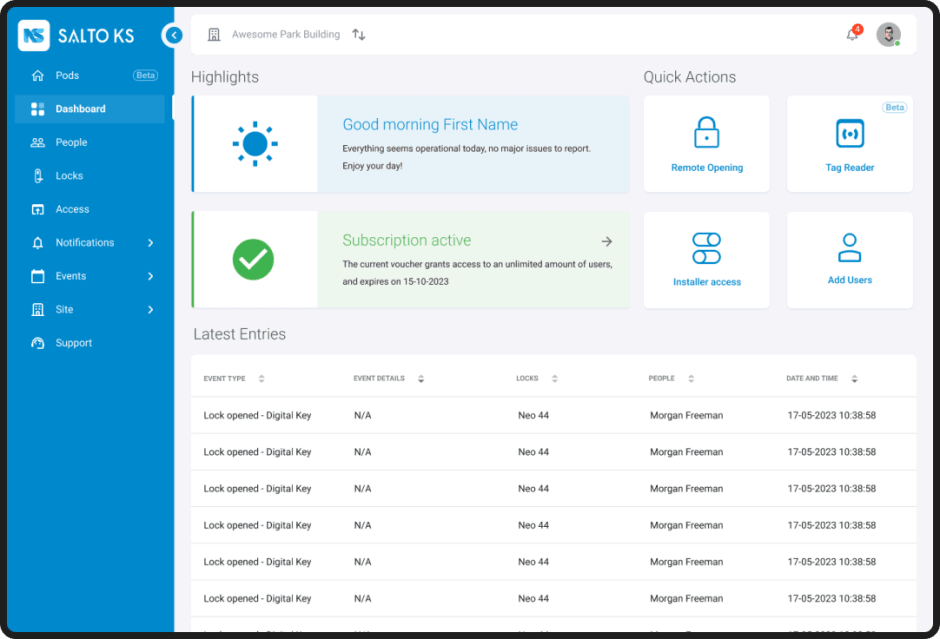
Salto hardware #
Salto's hardware is proprietary. The system works with Salto locks and readers, full stop, and this is the single most important thing to understand before evaluating the platform. If you have existing hardware from another manufacturer, plan on replacing it.
The XS4 range of electronic escutcheons and cylinders retrofits onto most standard door types without rewiring, and the battery-powered design means a qualified installer can handle most doors without an electrician. The IQ gateway and IQ Mini connect the lock network to the internet, typically one per floor or zone.
For larger deployments, Salto also offers wired readers and controllers through the Salto Space on-premises platform, which supports a broader range of installation types.
Salto pricing #
Salto does not publish pricing. Hardware costs vary by lock type, door count, and installation complexity, and Salto KS software licensing is subscription-based but quoted per deployment. You'll need to contact Salto or an authorized installer for numbers.
Expect the hardware to sit at the higher end of the market. Multiple reviewers describe the lock units and RFID credentials as expensive compared to alternatives, and at large door counts, especially where existing hardware has to go, the total adds up fast.
Who is Salto best suited for? #
Salto's strengths map to specific situations.
- Buildings where wire-free installation is the priority: Older buildings, heritage properties, and any facility where running cables is impractical or too expensive are the situations the hardware was designed for.
- Hospitality: Hotels, serviced apartments, and short-term rentals where guest access needs to be issued, managed, and expired automatically without front desk involvement.
- Coworking and managed workspaces: Salto KS is widely used in coworking, though some operators report integration friction with coworking-specific software platforms.
- Healthcare and education: Environments that need several credential types, solid access logging, and role-based permissions.
Where Salto fits less well: organizations that need a broad software integration ecosystem, published pricing, or hardware flexibility. The proprietary hardware model and the limited named integration list are real constraints if your software stack requirements are specific.

Salto reviews #
Positive reviews #
"I've never experienced any issues opening doors. The app provides a clear log of recent access, which makes it really easy to track time spent inside a building. There is no need to carry any access card or key — everything works through your smartphone." — Source: Capterra
Negative reviews #
"We have issues with locks going offline, can't really use time frames, integration issues with coworking software, and more. It has been okay — if I could, I would probably research another system like Kisi maybe." — Source: Capterra
Note: Salto KS has only 9 reviews on Capterra at the time of writing, a small sample. The broader Salto Systems range may look different depending on platform and deployment size.
How does Salto compare to Kisi? #
Salto and Kisi both show up in coworking, commercial real estate, and hospitality, but they come at the problem from opposite ends. Salto is hardware-first: the value sits in the wireless lock technology and the installation flexibility it buys you. Kisi is software-first: the value sits in the cloud platform, the integration ecosystem, and connecting access control to the tools you already run.
If wireless installation is your priority and proprietary hardware is acceptable, Salto is a plausible option. If you need transparent pricing, named software integrations, and hardware flexibility, the differences between the two are meaningful.
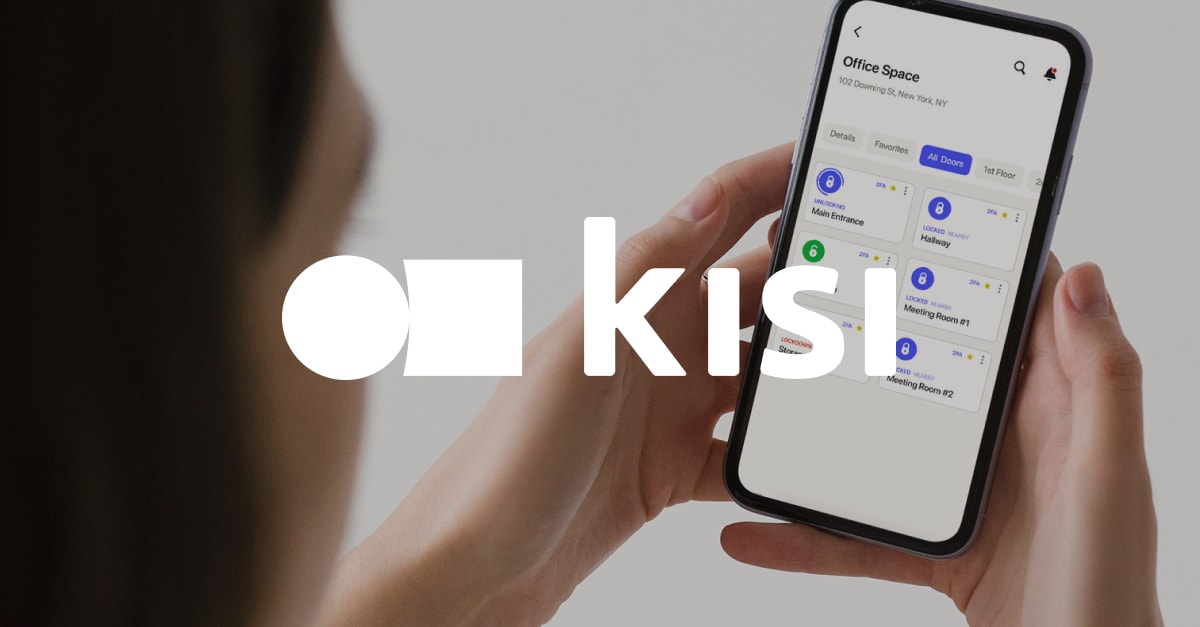
Modern access control built for today's workplaces
Manage users, doors, and permissions from anywhere.