

Kisi and Brivo are two of the most established cloud-native access control platforms on the market. They’re cloud-managed, mobile-first, integration-friendly, and built for commercial deployments. If you're evaluating both, there are some differences that you need to consider before ultimately choosing the best option for your facility.

At a glance #
How Kisi and Brivo compare #
Platform background and maturity #
Brivo is one of the oldest cloud access control companies in the market, launching back in 1999. Over more than two decades, they have leveraged that head start to build a global footprint, expanding their system into an all-in-one smart platform that natively loops in cameras, visitor logging, and physical intrusion alarms.
Kisi entered the arena in 2012 with a fundamentally different design philosophy: software-first and highly connected. Instead of treating access control like a closed hardware silo, Kisi built an open ecosystem designed to integrate instantly with modern cloud applications. This approach allowed Kisi to scale incredibly fast within fast-moving spaces, like fitness franchises and flexible workspaces.
Both are mature, well-supported cloud platforms. Brivo has a legacy of institutional compliance and a wide ecosystem, while Kisi leans more into a modern, intuitive management experience optimized for rapid software connectivity.
Pricing model and transparency #
When it comes to pricing, we generally have a divide in how both vendors structure operational costs.
Kisi aligns its software plans directly with how specific industries use physical space, starting at a transparent baseline of $99/month. If you are a fitness space for example, your plan can be designed around active user limits so you aren’t penalized for having multiple interior doors. Kisi also has advanced capabilities (like automated visitor check-ins or partner-driven tailgating detection), as add-ons to the pricing structure.
Brivo has a more traditional security pricing framework, charging a recurring subscription fee billed on a per-door, per-month basis. While this linear structure makes budgeting straightforward for basic layouts, the final number scales quickly because essential enterprise tools (e.g. API access, identity connectors, and advanced directory integrations) are often broken out as separate upcharges.
Hardware and compatibility #
Brivo has historically been more hardware-agnostic than most access control vendors. The reason for that is that it works with a wide range of third-party hardware including HID, Allegion (Schlage), and ASSA ABLOY readers and controllers, as well as PoE and wireless options.
Kisi uses its own proprietary controller a.k.a. the Kisi Controller Pro 2, which was made to work with existing Wiegand wiring, readers, and credentials, which means many buildings can adopt Kisi without replacing their current hardware at the door level. Kisi does not support as broad a range of third-party controllers as Brivo, but the migration path via existing wiring is practical for most facility deployments.
Also, both systems support standard mobile credentials, key cards, and fobs, and neither requires full hardware replacement in most existing deployments.
Integrations #
Both platforms are built on open APIs and support a strong core set of identity and directory integrations such as Okta, Microsoft Azure AD, Google Workspace, Active Directory, and SAML SSO.
Where they differ is in the breadth and focus of their wider integration ecosystems. Kisi's integration library covers 100+ tools with particular depth in fitness software (like Mindbody, ABC Glofox, Exercise.com, ABC Ignite, TeamUp), coworking platforms (such as Optix, Archie, OfficeRnD), camera systems (e.g. Vortex, Rhombus, Cisco Meraki), and workplace tools.
Brivo's Integration Marketplace also covers a broad range of enterprise tools, building automation systems, video surveillance providers, and property management platforms. Eagle Eye Networks video integration is a favourable option since it allows access events and video to be correlated natively within the Brivo interface. Brivo also integrates with Envoy, Zendesk, and a range of HR and identity platforms.
To summarize, for fitness and coworking operators, Kisi's named integration list provides more certainty upfront, but for commercial real estate and enterprise operators with building automation, HR systems, and multi-platform security needs, Brivo's marketplace is more attractive in those categories.
Video, visitor management, and alarms #
If we’re talking about door access tied to cameras, guest check-ins, and alarm systems, both platforms get you there, but they use completely opposite playbooks.
Brivo aims for a closed, all-in-one setup. Their video surveillance integration is smooth as it lets you match camera clips to door events right inside the Brivo panel. They also build their own visitor and alarm modules directly into the platform, so if you want one single dashboard and one primary vendor relationship for your entire security layout, Brivo is highly consolidated.
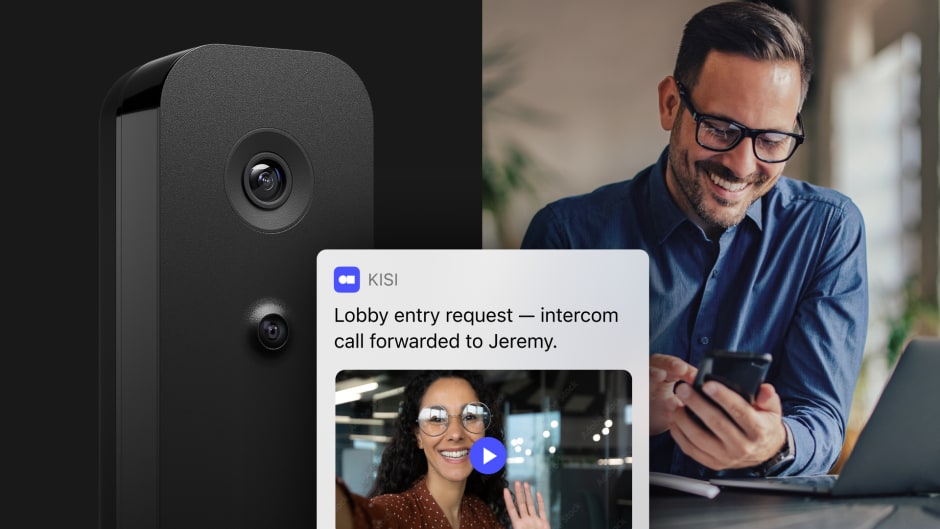
Kisi uses an open, modular approach through its One Security Platform. Instead of forcing you to buy into their preferred partners, Kisi lets you activate video verification, visitor check-ins, or intrusion detection as software add-ons that plug directly into video tools you might already own, since the company has partnerships with multiple camera vendors. This is incredibly practical if you’ve already invested in high-end camera networks or guest platforms and want to make them better rather than throw them away.
Compliance and certifications #
For basic commercial setups, both vendors easily clear the standard security hurdles with SOC 2 Type II, ISO 27001, and NDAA compliance. However, if you operate in heavily regulated sectors, the gap widens.
Kisi has standard enterprise data privacy and protection layers with full GDPR and CCPA compliance, backed by Google Cloud Platform’s Cloud Armor defense and annual third-party penetration testing. Even though it covers all operational security bases for mid-market and enterprise spaces, organizations with highly niche federal or military compliance requirements should vet their specific guidelines directly with both teams.
Brivo, on the other hand, has a broader portfolio of specialized institutional compliance stamps such as:
- Native HIPAA compliance for medical facilities
- PCI DSS for retail or banking pipelines
- CMMC for defense contracting
- FedRAMP-ready posture for government buildings
Deployment and installation #
For deployment and installation, it’s safe to say both systems are doing great at minimizing on-site server hassles because they are cloud-native.
On the physical hardware side, they follow different installation logics. Brivo relies on a traditional, closed dealer structure. That means you cannot buy or configure the system yourself; you work exclusively through an authorized Brivo reseller network to map out, wire, and deploy the hardware.
Kisi gives you significantly more deployment flexibility by keeping all their wiring diagrams and technical documentation completely open. To put it in simple terms, Kisi doesn't force you into a proprietary dealer tier just to put readers on a wall. For retrofits, the Kisi Controller Pro 2 lets your team easily take over legacy wiring and readers to slash upfront deployment costs.
Which industries is each system suited for? #
Fitness and wellness #
Kisi has a clear advantage here, thanks to KisiFit, which natively links up with major club management platforms like Mindbody, ABC Glofox, and more. Fitness operators get features such as tailgating detection or 24/7 self-service access, which are built specifically for gym and studio operators. Brivo can technically protect a fitness facility as well, but it often requires complex middle-tier gateways, leading to ongoing software friction and upcharges.
Commercial real estate and multifamily #
In this sector, Brivo has more influence as it has spent decades establishing itself as a standard option for large-scale commercial real estate and apartment portfolios. Their Global View dashboard gives property managers a bird’s-eye view across multiple buildings and its ties with real estate management software make Brivo a practical option for broad portfolio oversight. Kisi also handles multi-tenant properties well too, serving as a great option for modern developers who prefer prioritizing smartphone credentials and custom tenant-experience app connections.
In the coworking space, Kisi has a stronger foothold since it plugs directly into management platforms like Optix, Archie, and OfficeRnD out of the box. For example, when a member buys a hot desk pass or changes their subscription, Kisi dynamically updates their door permissions, taking manual administration completely off your community manager's plate. Brivo’s marketplace does feature coworking tools, but it lacks the plug-and-play setup depth that Kisi has for shared workspaces.
Enterprise and multi-site organizations #
Both vendors handle massive enterprise facilities, but they address different IT preferences. For instance, Brivo’s enterprise package leans heavily into administrative scale, because it has unlimited dashboard admins, dedicated priority support, and strong uptime metrics which are managed through a centralized multi-site dashboard. Kisi matches that scale with unified, global access rules and instant real-time reporting, but it mostly focuses on tying door security directly to your core identity tools like Okta or Azure AD for rapid onboarding.
Healthcare #
On the healthcare side, Brivo is usually the logical choice for medical facilities, clinics, and hospital spaces where patient privacy laws overlap with physical building security. That’s because they hold native HIPAA compliance certifications, which is why healthcare compliance officers specifically mandate Brivo for sensitive environments. Kisi easily satisfies standard commercial entry tracking and data privacy requirements, but it doesn't hold that explicit HIPAA certification stamp, meaning healthcare buyers should double-check their legal criteria before making a final call.
Government and defense #
Similarly, Brivo does meet the strict procurement rules of highly regulated public spaces, because it holds a CMMC certification for defense contractors alongside a FedRAMP-ready design framework for federal facilities. While Kisi is fully NDAA compliant and perfectly suited for standard commercial operations, it doesn’t have these additional specialized military and government-level clearance stamps.

Kisi vs Brivo reviews #
Kisi — positive reviews
"Kisi's intuitive platform empowers us to manage access like a pro, ensuring our security posture remains strong." — Capterra
Kisi — negative reviews
"While Kisi excels in core features, advanced investigation tools could be more robust." — Source: Capterra
Brivo — positive reviews
"Brivo Access is great user interface for all levels. Easy to use, reference, identify areas for effective and secure account management." — Capterra
Brivo — negative reviews
"It can be a bit clunky at times and difficult to manage without a consultant." — Capterra
Which one is right for you? #
Choose Kisi if:
- You're in fitness, coworking, or a vertical with specific software platforms you need access control to connect to natively
- Pricing transparency matters to your evaluation process and you want to understand costs before talking to sales
- You have existing Wiegand wiring you want to retain without full hardware replacement
- Your camera and visitor management tools are already established and you want access control to integrate with them rather than replace them
- A modern UX and software-first platform are priorities
Choose Brivo if:
- You need HIPAA, CMMC, PCI DSS, or FedRAMP compliance for healthcare, government, or defense environments
- You want native video integration, visitor management, and alarm management under one platform without separate integrations
- Hardware flexibility is important and you want to work with a range of third-party readers and controllers beyond a single vendor's hardware line
- You're managing a large commercial real estate or multifamily residential portfolio with complex multi-site requirements
- You're a large enterprise that needs volume pricing at 500+ doors and dedicated account management
Looking for a Brivo alternative? #
Interested in an access control platform that gives you the freedom to choose your own hardware integrations and matches your software costs directly to how your business operates? Then get a custom Kisi quote today!
