

When comparing Kisi and Genetec, it is vital to understand that this is not an apples-to-apples evaluation of two tech platforms. It is a massive structural division between two completely different worldviews of physical facility management.
Genetec is a titan of high-end physical security, engineering massive, unified on-premises and hybrid infrastructure designed to protect places like international airports, smart cities, military zones, and massive global corporate campuses. Kisi, by contrast, is a sleek, cloud-native access control platform built to connect doors directly to modern SaaS software and corporate identity pipelines.
We’ll break down the technical differences below.
At a glance #
How Kisi and Genetec compare #
Platform scope and philosophy #
It’s important to understand first that for Genetec access control is not a standalone software tool. Their platform, Security Center, is an ecosystem that blends a few things:
- access mapping (Synergis),
- enterprise video surveillance (Omnicast),
- automatic license plate recognition (AutoVu),
- situational AI analytics
This was pretty much designed for large-scale operations where physical security is a dedicated internal department with its own command room, security officers, and professional integration partners.
Kisi is different. It views the world from an open, software-first perspective, therefore, instead of trying to build an all-in-one hardware silo, Kisi acts as an agile cloud engine designed to connect outward to the tools your team already uses daily.
This can be an advantage because it doesn’t force an organization to spin up specialized local servers, and just hooks right into your corporate identity providers, HR onboarding files, and operational software libraries. Most importantly, it is engineered to deploy fast and smooth and manage building entries without requiring a dedicated on-site security detail.
Sales model and direct access #
Now, the actual procurement process brings about a massive divide. Kisi gives you direct, transparent access to the manufacturer. You can view base pricing online, coordinate a deployment trial, and deal directly with the vendor. Plainly put, it’s a major advantage for fast-moving businesses that want to skip third-party procurement loops.
Genetec operates entirely through a traditional, highly controlled network of certified security systems integrators, consultants, and enterprise resellers. You cannot buy directly from Genetec, nor can you self-evaluate their pricing or deploy their systems on your own. Mid-market buyers may not feel comfortable going through this process, but it does remain the standard for large corporate or government facilities.
Deployment model #
On the deployment side, Genetec’s model is tied to a hybrid-cloud or on-premises framework. On-site infrastructure utilizes appliances like the Synergis Cloud Link to process local hardware logic, which then communicates back to a centralized Security Center server hosted locally or in an enterprise private cloud. Basically, the entire platform is fundamentally configured for heavy-duty architectures which would need a specialized system administration and professional field engineering.
Kisi is completely cloud-native from day one. There are zero heavy on-site servers, the only thing needed being the physical edge door controllers. The administrative dashboard is accessible instantly from any standard browser, firmware updates roll out automatically over-the-air, and local deployment can be handled by your own facility technician or Kisi's installer network.
An additional advantage to the whole process is that for retrofits, the Kisi Controller Pro 2 can immediately take over existing legacy Wiegand wiring and readers, which saves you significant upfront construction costs.
Hardware and credentials #
If you have a massive legacy footprint of mixed physical hardware, Genetec has the major advantage. The platform is entirely hardware-agnostic and their credential system handles everything from traditional high-security proximity cards to hardware biometrics and enterprise mobile tokens.
Kisi, however, limits its core architecture to its own proprietary controllers. As mentioned above, it does easily bridge older systems via Wiegand wiring, but it does not support third-party controller cross-compatibility like Genetec does. Where Kisi shines is at the user level, because it has premium digital credential support.
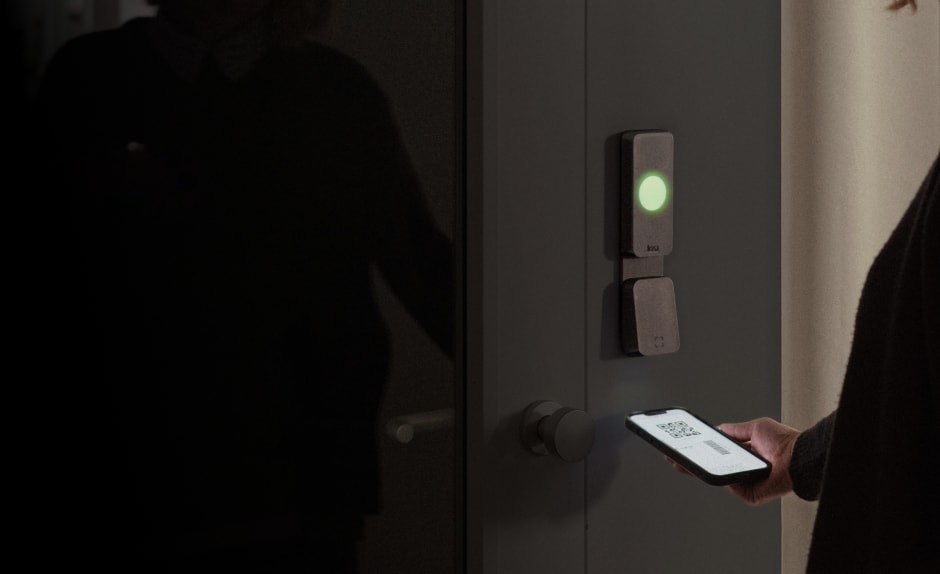
Kisi integrates natively with Apple Wallet and Apple Watch employee badges, and allows staff to tap through entries without unlocking or waking up their phones. This is a better consumer experience that Genetec's corporate app doesn't natively mirror.

Integrations and software ecosystem #
The integration libraries for these two platforms highlight different corporate priorities. Genetec has deep connections strictly inside the high-end physical safety and industrial IT worlds. Out of the box, it perfectly correlates door data with automatic license plate readers, SIP-based video intercom networks, advanced facial recognition analytics, and tactical mapping platforms. It basically focuses entirely on threat detection and asset visibility.
Kisi focuses on operational business workflows and has a library of over 100 pre-built, plug-and-play connections optimized for automated identity management and member operations. For instance, it syncs natively with enterprise IT directories like Okta and Azure AD, alongside industry platforms for fitness management (Mindbody, ABC Ignite) and coworking coordination (Optix, OfficeRnD).
If you have (or want to have) an automated business, Kisi updates entry permissions automatically without custom development, but Genetec requires dedicated software engineering via an open SDK to speak to standard commercial business tools.
Pricing and transparency #
Kisi has a transparent pricing baseline which starts at $99/month. The company protects your sales team's flexibility by structuring plans around your industry's operational metrics. This means that for membership-centric locations like fitness hubs for example, subscriptions scale by active member limits. That way, you aren't penalized for adding interior zone readers.
Genetec’s financial profile is completely hidden from the public since it’s quote-based. The total cost of ownership is determined by your chosen integration channel and factors in licensing, hardware endpoints, field installation labor, and ongoing system maintenance contracts. It is a traditional enterprise budgeting model mainly built for large organizations with capital allocation budgets.
Cybersecurity and compliance #
Data protection is central to Genetec’s identity, mostly because they protect critical municipal resources, military hubs, and global bank vaults. Hence, they build their systems with an intense defense-in-depth framework. They also provide advanced device-level digital certificates, claims-based authentication, and deep alignment with FedRAMP government regulations.
Kisi does have standard commercial data privacy and protection layers, and carries official third-party audited SOC 2 Type II and ISO 27001 compliance certifications. Since it’s backed by Google Cloud Platform’s Cloud Armor defenses and annual independent penetration tests, it does have plenty of protection for mid-market and enterprise spaces.
However, for specialized federal defense or critical infrastructure networks where Genetec's government-level framework is legally required, Genetec has the real edge.
Which industries is each system suited for? #
Enterprise and large corporate #
On the large corporation side, it’s safe to say that both platforms can run a massive corporate headquarters, but they appeal to different operational styles. Genetec is built for organizations running dedicated security teams who need deep situational awareness, unified video walls, and centralized monitoring. Kisi, on the other hand, targets corporate offices that prioritize fluid employee provisioning, linking entry keys straight to automated IT directories like Okta or Azure AD via SCIM to eliminate administrative overhead.
Government and critical infrastructure #
In this sector, Genetec is the standard choice, especially for facilities like for airports, public transit authorities, utility plants, and municipal smart cities. The company has deep cybersecurity architecture, defense-grade credentials, and a long history with global public sector procurement. While Kisi is completely NDAA compliant, it is intentionally built for commercial operations rather than municipal utilities or military infrastructure.
Fitness and wellness #
The fitness sector is an absolute shutout for Kisi. Through the specialized KisiFit platform, Kisi directly syncs front door access to membership statuses inside management systems like Mindbody or ABC Glofox. For example, if a member updates their account or schedules a workout, their mobile key updates instantly. Genetec doesn’t have much of a presence in the commercial fitness world and offers no fitness software capabilities out of the box.

On the coworking side, Kisi is a preferred choice in this market because it bridges directly with operational tools like Optix, Archie, and OfficeRnD. It automates desk space access and conference room bookings in the background and keeps community managers out of the keycard management business. Genetec's heavy, command-center platform is not necessarily designed for flexible, member-driven multi-tenant spaces.
Healthcare and education #
Here Genetec dominates the large hospital networks, university campuses, and public school districts where real-world emergencies require unified lockdowns, instant video verification, and intercom integration. Kisi does serve localized clinics, private practices, and specific university labs beautifully (especially where managing access permissions for a rotating staff is the main challenge) but overall it doesn't have Genetec’s footprint in these sectors.
Kisi vs Genetec reviews #
Kisi — positive reviews
Kisi's intuitive platform empowers us to manage access like a pro, ensuring our security posture remains strong." — Source: Capterra
Kisi — negative reviews
"While Kisi excels in core features, advanced investigation tools could be more robust." — Source: Capterra
Genetec — positive reviews
"The program’s functionality is fairly user-friendly and easy to navigate." — Source: G2
Genetec — negative reviews
"The two negatives I can think of are the initial upfront cost and the complexities with the initial set up of our system." — Source: Capterra
Which one is right for you? #
Choose Kisi if:
- You want to buy directly from the vendor without going through an integrator
- Pricing transparency matters, so you want to understand costs before starting a sales process
- Access control needs to connect with your existing software stack such as fitness platforms, coworking software, HR systems, identity providers
- You want a cloud-native system that can be deployed quickly and managed without a dedicated security team
- Apple Wallet credentials, MotionSense hands-free unlock, or fitness/coworking integrations are relevant to your use case
Choose Genetec if:
- You are a large enterprise, government agency, or critical infrastructure operator with complex, multi-system physical security requirements
- You need unified access control, video surveillance, license plate recognition, and AI analytics under one platform
- Your organization works with a certified security integrator who will handle deployment, configuration, and ongoing support
- You need specialized federal and institutional compliance baselines, such as FedRAMP alignment, FBI CJIS validation, or CMMC certification for military defense contracting
- You need interactive facility maps, SIP intercom integration, or multi-site Federation across globally distributed deployments
Looking for a Genetec alternative? #
Are you interested in a cloud-native access control platform that just skips all the heavy integrator layers and complex on-premises servers? Then feel free to get a Kisi quote to see how easily you can manage your facility.
