


Door buzzers might seem like a thing of the past, and it’s true that legacy buzzer systems don’t seem technologically advanced compared to more modern technologies. However, buzzers are a crucial part of many commercial door entry systems, offering a fast, convenient, and secure way to manage building access. With a buzzer, you can keep your business doors locked without alienating visitors, clients, and guests.
If your business uses a traditional buzzer or doesn’t have a system in place, you may be missing out on a cost-effective solution with a variety of benefits. In this article, we’ll explore what buzzer systems are, why they’re so important, and how to choose the right one for your organization.

Understanding door buzzer systems #
A commercial door buzzer system is an access tool businesses can use to control and monitor who enters a building without being physically present at the door. When someone arrives at the premises, they push a button on the buzzer and it notifies someone inside the building, who can then speak to them and determine whether to grant them access.
Types of commercial door buzzers #
Businesses can choose from multiple kinds of buzzer, intercom, and doorbell systems. One significant distinction is whether the intercom is audio-only or also allows for video communication. Traditional buzzers typically only have audio capabilities, meaning the host and visitor can speak, but not see. Video intercom systems, including Kisi’s Intercom Pro, allow you to not only speak with visitors when they arrive but also see them.
Another important difference between types of door buzzer systems is whether they’re wired or wireless. Some options require hardwiring, while others operate over WiFi or cellular signals. While large, complex facilities sometimes use wired buzzers, wireless systems allow for greater flexibility and businesses can install them without making infrastructure updates.
Door buzzer system components #
The specific components of a door buzzer system depend on the design and age. Traditional, audio-only buzzer systems consist of call buttons, speakers, and microphones, which are all connected using wiring. While some businesses still rely on these solutions, they’re quickly being replaced by more technologically advanced options.
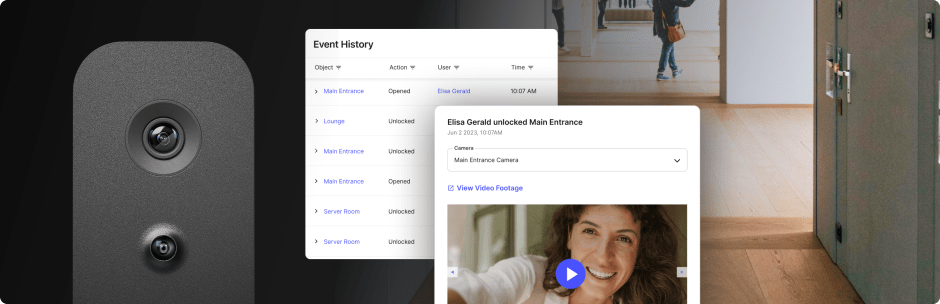
Newer intercoms and buzzers usually include an outdoor panel or base station, often with a camera, microphone, speaker, and touch-screen, as well as wirelessly connected receiving or substations. These substations may be physical devices within the building, but more often they’re apps on smartphones and tablets.
In the case of either legacy or updated systems, the substation is also connected to an electronic door lock. Security personnel, receptionists, and other employees can choose to unlock the door from a distance rather than manually opening it or using a physical key.

Looking for a smarter way to manage your front door?
See, speak to, and grant access to visitors from anywhere.
Comparing traditional and modern door buzzer systems #
Door buzzer entry systems for businesses have changed significantly over the past several years. Providers have refined them to address a broader range of needs while still maintaining their simplicity and straightforward operation.
Limitations of traditional door buzzers for businesses #
While legacy buzzer systems have met many business requirements for decades, each year they become more outdated compared to modern commercial needs. They lack mobile access, requiring someone to sit at a desk to respond to visitor arrivals and unlock doors.
As a result, businesses with traditional systems have to allocate staff specifically to this task, taking them away from other aspects of the business. Without remote management, organizations can’t grant access or review entry logs unless they’re physically on the premises.
Because they’re audio-only, legacy buzzers don’t give you a visual on the person at the door. This can cause confusion and, in the worst cases, create security vulnerabilities. In addition, they don’t integrate with other access workflows, complicating your management processes and creating inefficiencies.
Advantages of cloud-based systems #
In many ways, cloud-based buzzer systems are worlds apart from traditional options. For starters, they allow for more flexibility, security, and scalability. Employees can operate and manage them remotely using an app or online portal, and you can easily connect buzzers for additional doors or buildings to the same platform. This means you can monitor every potential entry point for your business at the same time. You can take full advantage of these benefits when you integrate your intercom or buzzer with Kisi’s comprehensive access control platform.
Cloud-based solutions also have automatic digital storage, so you can review footage and access logs whenever needed, whether for an upcoming audit or to follow up on a security concern. On top of that, upgrading from a legacy system enhances the visitor experience, by enabling a smoother, faster entry process. For example, if a guest arrives and they buzz at the door but no one is at the reception desk inside, the visitor is left waiting. With a system like Kisi, employees receive instant notifications on their mobile devices no matter where they are at any given time.
Finally, while a new and improved buzzer system might require an initial financial investment, it ultimately cuts costs. With stronger security, you’ll lose less money to compliance violations, theft, and property damage. That’s especially important considering large companies lost a combined $1 trillion to physical security incidents in 2022. You’ll also have the option to reduce or reallocate staff because you won’t need their constant on-site presence at access points.

Legacy buzzers vs. Kisi Intercom Pro #
Kisi’s commercial buzzer system, the Intercom Pro, is a next-generation alternative to traditional solutions. Here’s a breakdown of the biggest differences between the two.
Key features to look for in modern commercial door buzzer systems #
Doing some research before you buy a door buzzer system can save a lot of time and frustration in the end. However, considering the door intercom market was valued at $33.4 billion in 2025 and is expected to grow to $75.6 billion by 2032, that research can quickly get complicated. Wading through a long list of potential providers can make it difficult to find the right system for your business.
While every organization has to choose a door buzzer for their particular size, structure, and needs, there are a few core elements virtually every business needs. When you compare options, prioritize these points:
- Video capabilities: Video integration enables you to visually verify a person’s identity before admitting them to the building. Employees are less likely to accidentally admit someone who isn’t allowed in the building if they can match a person’s face with their name and the purpose of their visit.
- Mobile app access: A buzzer system with a mobile app allows you to see visitors, communicate with them, and unlock doors from smartphones and other devices. As a result, staff aren’t tied to their desks and guests are less likely to get frustrated by long wait times.
- Cloud-based systems: Cloud technology is essential for remote management and makes the system more scalable. It also limits the amount of physical infrastructure you need in place to install your system and get it up and running.
- Tracking and compliance tools: Access logs and audit trails are critical to maintaining accurate, up-to-date records of everyone who enters the building. You can use this information to investigate security incidents, document your regulatory compliance, and better understand the activity at your site.
- Multi-system integrations: Integrating a buzzer with other systems, including access control, visitor management, and video surveillance, simplifies your tech stack. The ability to manage all these tools from a single place saves time and gives you a fuller picture of your organization’s overall level of security.
- Ongoing maintenance requirements and costs: Along with the upfront cost, consider what you might have to spend on a buzzer system moving forward. For example, does the provider offer automatic software updates, and will the technology require frequent upgrades?
Because a buzzer system can affect your organization’s reputation, safety, and financial health, don’t commit to one without getting all the information you need. If possible, ask for a consultation or demo so you can see it in action and determine whether it will help or hinder your access management.
Keep building entries secure but accessible with a door buzzer system #
Door buzzers and intercoms aren’t the most glamorous security and access control tools, but they’re some of the most important. They give you full control over who enters your building, which translates to safer employees, stronger compliance, and a better visitor experience.
Whether you’ve never used commercial buzzers or you’re ready to take a step up from a legacy system, Kisi’s Intercom Pro is an ideal choice. With remote management, clear audio and video, and encrypted communication, the system protects and enhances your business operations. Reach out to get a demo, request a free quote, or talk to the Kisi team about a solution tailored to your unique needs.

Vera Eftimovska
Marketing Campaign Manager at Kisi, blends her psychology background with hands-on experience in access control and workplace security. Passionate about how technology and human behavior intersect, she shares insights that help businesses build resilient, future-ready, and security-driven workplaces.