


To use their space efficiently, maximize productivity, and foster a collaborative environment, modern businesses have to do much more than assign desks and hand out keys. They need more technologically advanced solutions to give greater insights into employee activity and establish control over their operations.
Office management software brings together all these capabilities, allowing teams to optimize space, automate desk and room bookings, manage resources, and improve their workplace operations. Those tasks are especially important in hybrid and flexible office environments, where needs change from one day to the next.
There’s no one-size-fits-all solution. The ideal tools for your organization depend on your company’s size, space layout, and need for integrations with access control, HR solutions, and other systems. To help you navigate all the office space management software options on the market, we’ve put together a list of the best ones and broken down everything you need to know to make the right choice.

What is office management software? #
In today’s hybrid and flexible-workspace era, office management software refers to digital tools that help organizations manage how physical office space is used, booked, and operated on a day-to-day basis. These platforms give teams visibility into space usage, enable desk and meeting room reservations, support visitor and employee flows, and provide data to improve workplace efficiency.
The key features of the most effective modern office space management solutions include:
- Desk and room booking
- Real-time occupancy data
- Space utilization reporting
- Interactive floor plans
- Space allocation
- Visitor management
Today’s tools are more comprehensive than older facilities systems, which primarily focused on asset tracking and basic maintenance needs. They also stand apart because they tend to use cloud-based architecture, enabling remote management and mobile access.
In addition, many solutions can integrate with other types of tools, including security and access control systems, and they leverage advanced technologies, such as artificial intelligence (AI) and Internet of Things (IoT) devices. As a result, they have a greater impact on the entire workplace experience, increasing efficiency, productivity, and accessibility.

Create a more secure and connected workplace
Bring access management, visibility, and convenience together.
Why offices are investing in office space management software #
Using software for office management allows organizations to cut costs and get the best use of their spaces. Although these types of tools have had an important role in business operations for many years, they’ve recently become more important because of developments such as:
- Hybrid models: Hybrid-friendly companies need booking systems for desks and meeting rooms so employees have the space they need when they come into the office.
- Under-utilized real estate: Organizations are looking for ways to reduce costs by identifying unused areas, minimizing real estate, and increasing efficiency through better space planning.
- Booking workflows: Companies need real-time platforms so employees can reserve spaces without double bookings, reducing the administrative burden on facilities managers.
- Visitor/desk/room coordination: In hybrid and coworking workplaces, streamlining check-ins and integrating visitor and employee scheduling is essential.
- Integration with access/security systems: To achieve safe, secure, and efficient workplaces, companies need to connect data across multiple systems and track occupancy, improve security protocols, and automate permission changes.
Office space software allows businesses to address these evolving needs and prepare for what’s next, whether that means scaling, adopting updated policies and practices, or addressing new security vulnerabilities.
Top 10 best office management software #
The market for office space facilities management software is growing rapidly, with nearly a $12 billion projection in 2025 and an annual rate of around 10.6 % through the early 2030s.
Below, we'll focus on the part of office management software that impacts how people use space day to day: desk/room booking, utilization insights, visitor flow coordination, and the operational tools behind flexible workplaces
These are the most powerful providers on the market and the solutions they offer.
Kisi #
Kisi is a cloud-based access control platform designed for modern offices that need secure, flexible, and centrally managed access. Rather than focusing on desk or room booking, Kisi supports the operational and security layer of office management by controlling who can access spaces, when, and under what conditions.
Teams use Kisi to manage doors, permissions, and access policies across one or multiple locations, with mobile credentials, real-time door events, and detailed audit logs. This makes it especially relevant in hybrid environments, where access needs change day to day and facilities teams need visibility without manual key management.
In addition to managing who can access spaces and when, Kisi supports reservations and bookings, keeping schedules and access permissions automatically in sync. Since bookings are directly tied to access rules, organizations gain better control over shared spaces while improving the day-to-day workplace experience.
Positive reviews for Kisi: The product works very well, its reliable, and the remote management is fantastic. I love the UI and how simple it is to use for both the administrators and the users.
Negative reviews for Kisi: The price is a bit higher than other options. But the robust features and flexibility seem to justify the cost.
Pricing: Kisi offers custom pricing based on deployment size and requirements.

Archie #
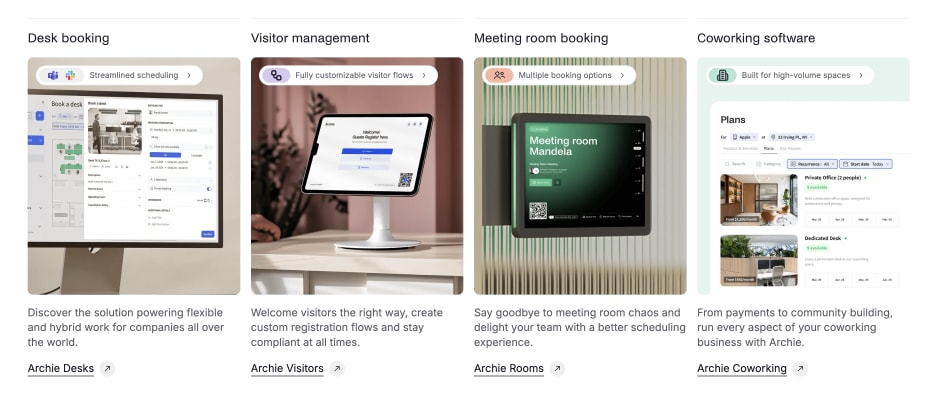
Archie is a well-rounded coworking software solution with desk and meeting room booking capabilities. It allows you to manage the entire customer journey, with membership management, lead forms, user profiles, tour tracking, and group permissions. You can also use the platform to collect payments from members.
One of the strongest aspects of Archie is its workspace booking features, which automatically sync with your calendars. You’ll have access to interactive floor plans, occupancy analytics, and community features, including a feed, communication, and networking. Archie offers a white-label mobile app and custom web branding, as well as multi-location management, occupancy analytics, and visitor management.
Positive reviews for Archie: Perfect for hybrid offices or other high-traffic facilities. In our case it’s a life saver as we finally have all visitor data and employee schedules in a single app, without jumping across different tools. Definitely saves a lot of time.
Negative reviews for Archie: I haven’t found any issues at the moment, although personally I would like more automations in place when it comes to notifications.
Pricing: Archie offers a Starter plan for $165/month and a Pro plan for $257/month, when billed annually. Enterprise organizations can request custom pricing.
Skedda #
Skedda's office space software makes it easy to reserve and assign desks, meeting rooms, and resources. You can track space utilization and will receive customized interactive floor plans, which Skedda designs at no cost, even during your trial period. Businesses can also use Skedda to set up advanced booking rules, permissions, and policies and automate when and where people can book spaces.
In addition, Skedda’s analytics allow you to improve the employee experience and increase efficiency. You’ll receive data on desk and meeting room usage and booking patterns. The company also offers a visitor management solution.
Positive reviews for Skedda: Skedda has an easy-to-use interface with robust features. Our implementation was very well supported, and they gave several presentations to my staff showing them how to use the product.
Negative reviews for Skedda: We had only a few suggestions for improvement, which were well received by the Skedda team.
Pricing: Skedda’s pricing has a Started Plan for $99/month, a Plus plan for $149/month, a Premier plan for $199/month.

Optix #
Optix is a coworking software solution that automates workflows. It’s useful for booking desks, resources, and meeting rooms. The assignments feature allows you to reserve desks and offices for long-term members, and your organization can use it to manage billing, payments, and invoicing.
If you want to customize the user experience, you can use the white-labeled mobile app. To build collaboration and community, Optix includes a community feed, messaging, and a directory.
Positive reviews for Optix: Responsive and helpful support team. I have seen features I recommend be added to the platform, and the support team has been amazing at asking clarifying questions. You can tell they genuinely care about the quality of their product.
Negative reviews for Optix: There are a few features I think would make a huge difference (like discount code) would make it even better. Wish there was little more offered through the web widget.
Pricing: Optix offers an Essentials plan for $197/month, a Pro plan for $299/month, and a Grow plan for $498/month, when billed annually. They also offer custom pricing for scaling organizations.
OfficeRnD #
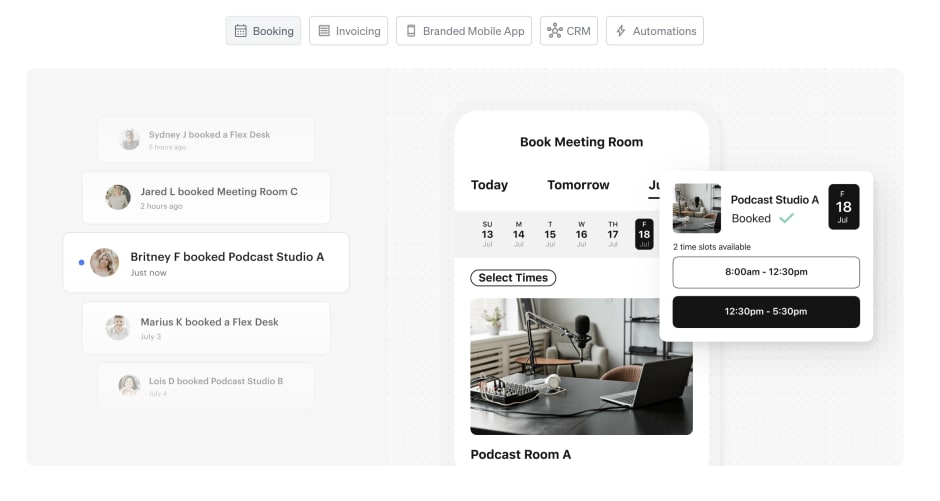
OfficeRnD is a customizable workplace management platform you can use to reserve desks and spaces. The system includes office maps and one-click booking, and you can filter spaces based on resources and preferences. Advanced bookings options include private or recurring reservations, advanced assignments, and bulk bookings, which are ideal for space optimization.
In addition, OfficeRnD has calendar syncing features and collaboration capabilities. Users can send and receive invitations and get recommendations on the most productive days to spend in the office.
Positive reviews for OfficeRnD: OfficeRnD has a lot of competition for coworking space and meeting reservation management, but the ease of use and the ease of integrating through third parties to add utility can’t be matched.
Negative reviews for OfficeRnD: There are a few features that we’d prefer were built into the software so we wouldn’t have to integrate through third parties, but this is a minor issue and doesn’t compromise overall utility.
Pricing: OfficeRnD’s offers a Start plan for $99/month, a Professional plan for $399/month, and custom pricing for enterprise organizations. You can add on their Visitor Hub for an extra fee.

Nexudus #
Nexudus offers both a coworking platform and smart office management software. Their solutions include desk and room bookings with real-time availability, rules, and customizations. They also automate check-ins, billing, and payments and have visitor management, reporting, and analytics capabilities.
The platform’s AI gives you insights into office trends so you can make more informed decisions. In addition, the community features allow members to see where their teams are working at any given time, participate in community boards and announcements, and explore the employee directory and interest groups.
Positive reviews for Nexudus: Nexudus is a flexible tool that adapts to the different cases and needs of each company. In our case, it has allowed us to manage flexible spaces efficiently.
Negative reviews for Nexudus: It is not an easy tool to learn; it requires time to adapt for the administration part, like all software.
Pricing: The Nexudus coworking platform is available starting at $150/month/location, with the price increasing based on the number of users per location. Their Growth plan offers custom pricing for organizations with more than 500 active users.
Spacebring #
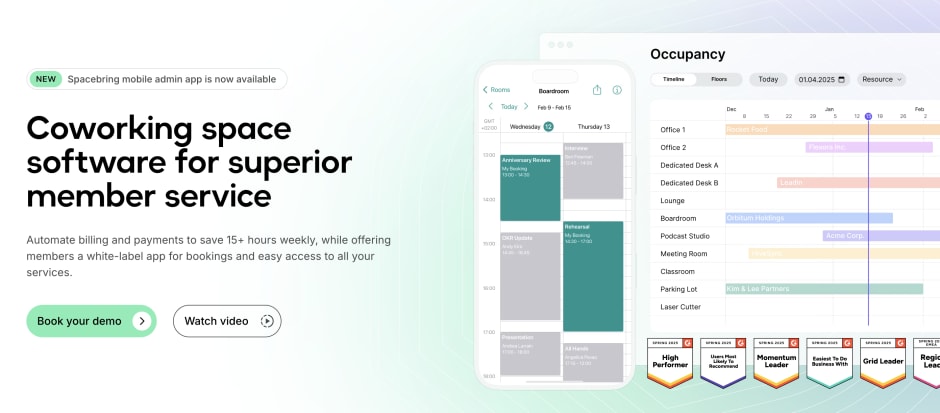
With Spacebring, you can take advantage of coworking and shared space management features to automate and streamline processes. Members can book meeting rooms, desks, parking spaces, and equipment. Company leaders can optimize space usage based on trends and usage patterns. Spacebring can also integrate with several different types of tools, including calendars, payment gateways, access control systems, and other apps.
Positive reviews for Spacebring: My overall experience, from initial onboarding and setup, daily use and support has been exceptional. The customer support they provide is unlike anything I have ever experienced and I cannot rate them highly enough in this regard.
Negative reviews for Spacebring: There have been a few limitations to the software however the team have been incredibly open to feedback and suggestions and are continually adding features and improving the product.
Pricing: Spacebring offers an Essential plan for $171/month and Pro plan for $225/month, when billed annually. They provide custom pricing for enterprise organizations.
OfficeSpace #
OfficeSpace gives you the power to build customized floor plans with a drag-and-drop space and scenario planner. Once you create these maps, members can book desks and meeting rooms or managers can assign long-term seating.
The platform also has AI-powered space planning. It recommends layouts and adjacencies based on your organizational needs and analyzes how your teams use their workspaces to makes suggestions on how to boost occupancy and limit planning time.
Positive reviews for OfficeSpace: The OfficeSpace software went from a basic need to manage workplace moves and has ended up providing way more than we ever thought. The additions keep coming along with expanded reporting.
Negative reviews for OfficeSpace: Sometimes updates get pushed a little too quickly which introduces bugs, but OfficeSpace is quick to fix them.
Pricing: OfficeSpace has three tiered plans: Lite, Essentials, and Pro. Reach out for pricing information.

Yardi Kube #
Yardi Kube is unique from many office manager software solutions in that it is divided into three portals. First is the Prospect portal, which allows you to customize services and offerings based on location. The Member portal includes an app, so members can access rooms and reservations, update their account information, and communicate with other members and staff. They can also handle billing and payments directly through the app.
Finally, the Operator portal is essential for organizations hoping to create, edit, and share contracts and manage space configurations. In addition, business leaders can track bookings and analyze space utilization.
Positive reviews for Yardi Kube: It is very user friendly. You have the ability to book, change, and cancel appointments with ease. Their customer support team is the best!
Negative reviews for Yardi Kube: I find it a little difficult to export reports into a PDF, but I’m sure this is something that’ll be fixed in future updates.
Pricing: Yardi Kube offers standard and pro solutions. Contact them for pricing information.
Nibol #
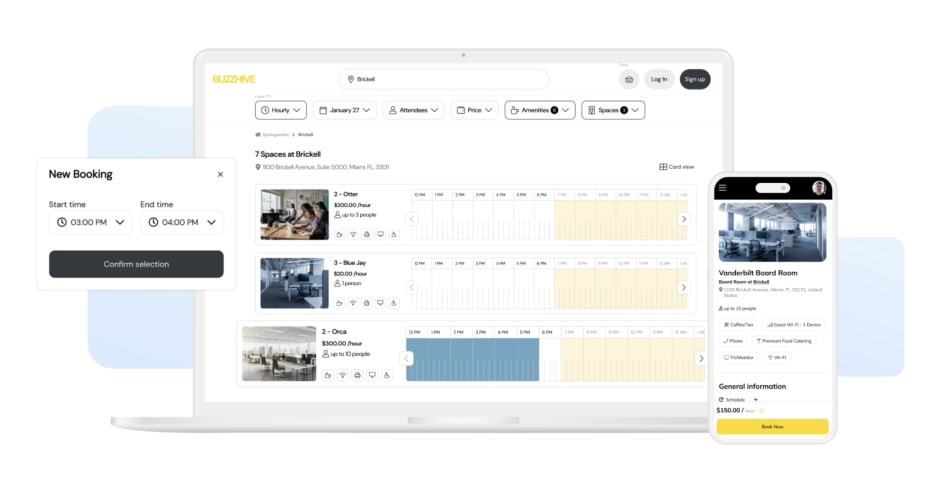
Nibol is a booking, visitor management, and analytics solution. Members can use it to reserve desks, meeting rooms, and coworking spaces. Managers can take advantage of its attendance management and scheduling capabilities to minimize administrative tasks and improve the employee experience. In addition, Nibol allows for mailroom management and reporting.
Positive reviews for Nibol: Nibol is a fantastic app for planning and organizing workstations.
Negative reviews for Nibol: Sometimes the check-ins are not collected by the app.
Pricing: Nibol’s office management platform is billed annually, with discounts for longer commitments. Reach out to request a quote.

Points to consider when implementing an office management system #
Selecting an office reservation system is challenging not only because of the wide range of options available but also because of organizational complexities. Before investing in a particular software, consider how it will align with your goals and the solutions you already have in place.
How to choose the right office management software #
Choosing the right office space management software requires you to look carefully at your specific requirements and preferences. Assess your organization’s needs and look at these aspects of each solution:
- What features it offers, such as interactive floor plans, real-time analytics, and desk or room booking
- Integrations with communication, security, and access control solutions you already have in place
- The ease and cost of scalability
- Compliance with any security or data privacy requirements or regulations for your industry
- The availability and quality of customer support
- Customization so you can adapt the system to your organization’s unique needs
Once you’ve evaluated each of these areas, you can pinpoint the best solutions for your company.

Want a clearer picture of how people use your facilities?
Track access activity and space utilization from one platform.
Office space management best practices #
Choosing the right software is just the beginning of optimizing your office space management. Following a few best practices will take your success further.
Start by focusing on flexibility and using modular layouts so you can adjust as your workforce changes. This is particularly critical if you expect your organization to scale in the future or anticipate using a hybrid work model, where employee occupancy will differ throughout the week.
Next, prioritize convenience, comfort, and wellbeing. Employees will be more productive and successful when they feel at ease in the workplace. This means dividing spaces in a way that makes sense for collaboration, providing ample light, and accommodating worker preferences and requests.
Finally, involve your employees in every stage of the space management process. Ask for their input into designs and technologies. While you may not be able to offer everything they want, understanding their perspective will help you create a smarter, more efficient workplace design.
Enhance your office space management with Kisi #
Space management in an office is about more than arranging desks and setting up meeting rooms. It requires a deep understanding of what employees need, what modern work models require, and how space contributes to greater business outcomes.
Kisi’s future-proof access control solution is an ideal partner for an office space management system. It allows you to make the employee experience more convenient and secure. Request a demo or reach out to our team to discuss how Kisi can contribute to better space management.

Vera Eftimovska
Marketing Campaign Manager at Kisi, blends her psychology background with hands-on experience in access control and workplace security. Passionate about how technology and human behavior intersect, she shares insights that help businesses build resilient, future-ready, and security-driven workplaces.