

Brivo has been selling cloud access control since 1999, which makes it older than most of the category it now competes in. A lot has changed recently, though, especially since the company merged with Eagle Eye Networks at the end of 2025. In fact, the platform you'd evaluate today looks quite different from the one buyers saw even two years ago. This review covers what Brivo offers now, what it costs, who it fits, and what its own customers say about it.
At a glance #
Brivo history #
When Brivo launched in 1999, every other access control system on the market ran on servers in a closet. Brivo put the whole thing in the cloud instead, and spent the next two decades building on that. Today the platform runs more than 100,000 access points in over 60 countries, with its deepest roots in commercial real estate, multifamily residential, and distributed enterprise deployments.
When the December 2025 merger with Eagle Eye Networks came, it changed what Brivo is. Eagle Eye built its business on cloud video surveillance, and the two companies had been integrating their products for a decade before making it official.
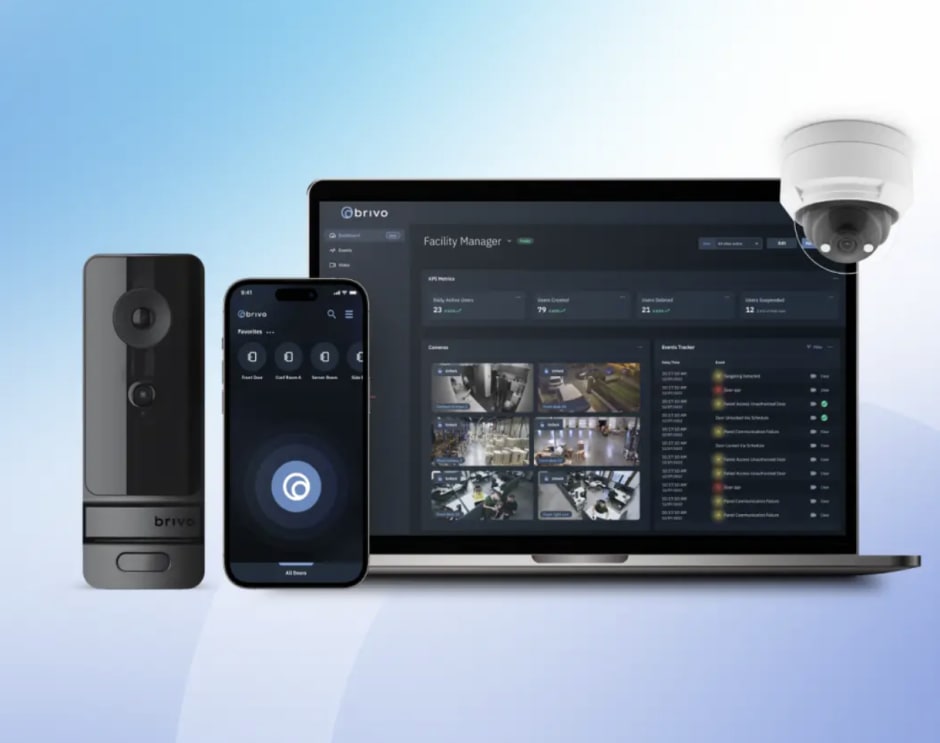
For buyers, the practical upshot is that Brivo no longer sells just door access, and the current platform (sold as the Brivo Security Suite) bundles access control with cloud video powered by Eagle Eye, alongside AI video analytics through an agent called Eeva, as well as other features under one dashboard.
Brivo key features #
Cloud-based access control #
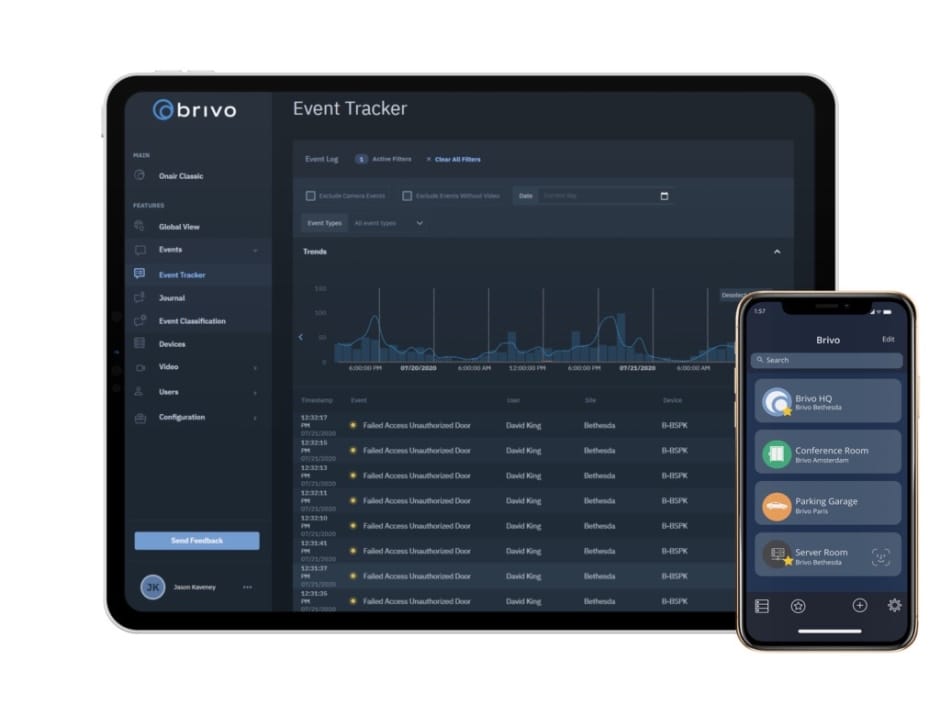
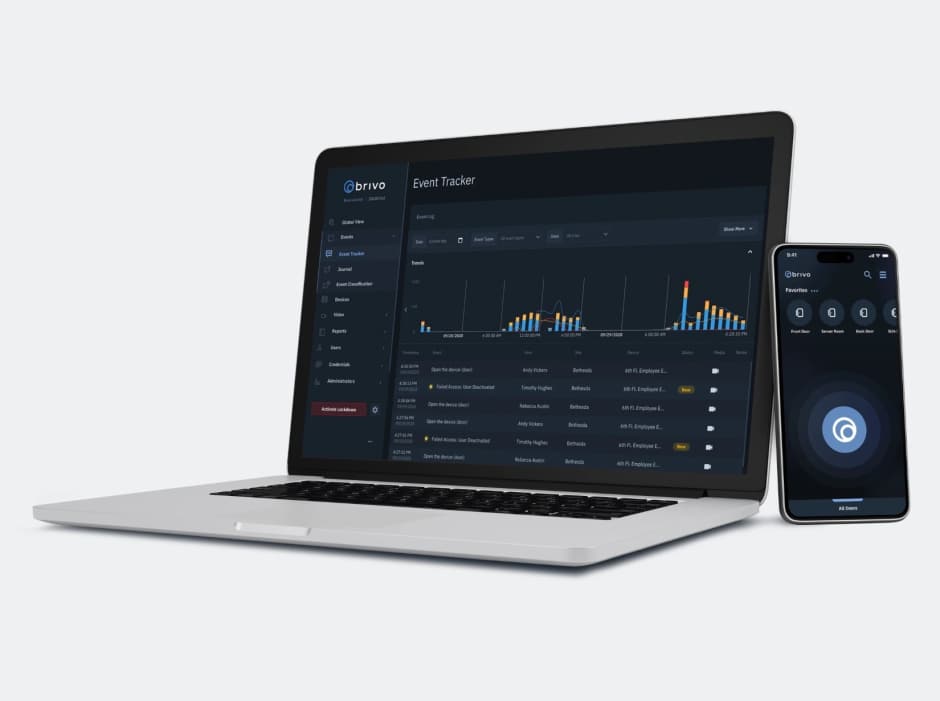
The core of the platform is cloud-managed door access. Administrators handle users, credentials, schedules, and access rules from a browser or the Brivo mobile app, with no on-premises software to maintain. Real-time event logs, remote unlock, and access revocation all live in the same dashboard, and the system scales from one building to thousands of doors.
Unified video and access #
Since the merger, door events and camera footage sit in one interface. An administrator can pull up a door unlock and the matching video clip without switching platforms or wiring up a separate integration. The Eeva AI agent adds natural language monitoring: describe what you want flagged, say someone propping open the loading dock door, and the system watches for it.
Mobile credentials #
Brivo supports smartphone access through its app on iOS and Android, and badges can also live directly in Apple Wallet or Google Wallet, so employees tap their phone at the reader without opening anything. Wallet credentials require the Brivo Wallet Pass add-on, so factor that into pricing conversations.
Open hardware #
Brivo works with readers and controllers from HID, Allegion (Schlage), ASSA ABLOY, and other third-party manufacturers. Most organizations with existing infrastructure can adopt the platform without ripping out hardware, and installers get flexibility on new builds.
Directory and identity integrations #
Platforms like Okta, Microsoft Azure AD, Google Workspace, Active Directory, and SAML SSO are all supported. SCIM provisioning handles the user lifecycle automatically, so when someone joins or leaves the company, their door access follows without anyone touching the admin panel.
Compliance #
Brivo holds SOC 2 Type II, ISO/IEC 27001:2022, HIPAA, PCI DSS, GDPR, NDAA, and CMMC certifications, and is FedRAMP-ready. This coverage is relevant if you operate in healthcare, government, or defense contracting, where certifications are a hard requirement rather than a nice-to-have.
Brivo hardware #
Brivo's open platform supports readers and controllers from HID, Allegion, and ASSA ABLOY, the three most widely deployed hardware brands in commercial access control. Buildings with existing infrastructure can usually keep it. PoE and wireless options are also available, and Brivo also sells its own line of control panels, readers, and video intercoms.
For new installations, expect hardware costs of roughly $1,500 to $3,000 per door including installation labor. That range moves around a lot depending on building type, what's already in the walls, and who does the install.
Brivo pricing #
Speaking of pricing, that runs per door per month across three tiers: Essential, Pro, and Enterprise. Publicly available information puts the cloud subscription at roughly $15 to $50 per door per month depending on the edition, with hardware billed separately at the $1,500 to $3,000 per door range mentioned above. However, Brivo does not publish a complete price list. Full pricing requires a quote from their sales team or an authorized reseller.
Who is Brivo best suited for? #
Ultimately, Brivo is built for scale, so multi-site portfolios, distributed enterprises, regulated industries, and commercial real estate operators managing tenants across large buildings are the deployments the platform is targeting overall.
For regulated buyers, the compliance list is another draw. If you need HIPAA, CMMC, or FedRAMP readiness, check whether the certifications cover your specific use case, since that's where Brivo positions itself.
The Eagle Eye merger also makes Brivo worth a look if you want video surveillance and access control from one vendor, on one contract, without having multiple integrations.
Smaller to mid organizations are a different story. If you run a single site, a boutique studio, or a small office, the per-door pricing and partner-led installation process may cost more and involve more friction than platforms designed for your scale.
Brivo reviews #
Positive reviews #
"We used Brivo Access when we first opened our gym in 2015 — they are so reliable, and the system always works — never had a glitch in the system and members always able to get in. Reporting was easy." — Source: Capterra
Negative reviews #
"Software is clunky to navigate. App control is limited." — Source: Capterra
How does Brivo compare to Kisi? #
Brivo and Kisi are both cloud-native platforms with strong integration ecosystems, but they ultimately serve different buyers. Brivo's compliance depth, native video through Eagle Eye, and multi-site tooling make it the stronger fit for large enterprises, regulated industries, and commercial real estate portfolios.
On the other hand, Kisi's transparent pricing, fitness and coworking integrations, and simpler onboarding suit smaller and mid-size organizations with specific software stacks to connect.
For a full side-by-side covering hardware, pricing, integrations, compliance, and industry fit, see our dedicated comparison page. Alternatively, if you want to speak with our team about a custom quote, you can get in touch directly.