


In the modern logistics landscape, the traditional 10-year industrial lease is being replaced. Brands scale at lightning speed and seasonal businesses demand more agility, so a new model has taken over: co-warehousing.
However, even if this "sharing economy" brings efficiency to industrial real estate, it also brings a massive security headache. In a single-tenant warehouse, access control is relatively straightforward. In a co-warehouse, it isn’t. How do you manage hundreds of different tenants, thousands of high-value SKUs, and a constant stream of third-party delivery drivers in a single building?
Door entry systems for co-warehouses can become the differentiator businesses will need with this new evolving model. In this article, we’ll break down how modern access control can become the invisible engine behind successful co-warehousing operations.

What is co-warehousing? #
To understand the security needs, we first have to define the environment. Co-warehousing is a term that refers to a shared warehouse environment where multiple independent businesses operate under one roof.
Instead of leasing an entire facility, tenants rent dedicated units or sections within a larger warehouse. Thus, they share common infrastructure such as loading docks, corridors, equipment areas, and utilities. This is an attractive model for growing companies such as e-commerce brands or logistics startups or even seasonal businesses that need flexibility without long-term industrial leases
Tenants can scale their footprint up or down as operations change and they still benefit from a facility that is ready for storage, fulfillment, or light industrial work.
What is a door entry system for co-warehouses? #
A door entry system is the digital infrastructure that replaces traditional keys with cloud-managed credentials. As a warehouse operator, you can manage who can enter specific areas within a shared warehouse facility. In a multi-tenant warehouse, this typically includes main building entrances, loading dock doors, shared corridors and equipment areas, individual tenant units and exterior gates or yard access.
At the most basic level, a door entry system consists of readers installed at access points, controllers that process permissions, and a cloud-based dashboard where administrators manage users and access rights. When someone presents their credential, the system verifies whether they are authorized to access that specific door at that specific time.
The benefits of door entry systems in co-warehouses #
When you transition from physical locks to a digital door entry system, the benefits are very obvious for the entire ecosystem.
- Tenant separation: A digital system allows you to separate members. Each business within the facility can be granted access only to its assigned unit and designated shared areas. That way, there’s no accidental or unauthorized entry into neighboring spaces
- Controlled loading dock access: Loading docks are high-traffic, high-risk zones so you can ensure that only authorized shipping personnel or specific tenants with a scheduled "dock window" can open specific doors.
- Time-based permissions for shift workers: Since logistics don't always happen during 9-to-5 hours, you can set schedules so that a cleaning crew, for example, can only enter at night, while a standard tenant has 24/7 access, and a temporary contractor is limited to a 4-hour window.
- Remote management for operators: When employees join or leave, credentials can be issued or revoked instantly through a centralized dashboard. There is no need to collect physical keys or rekey locks.
- Clear audit trail: In a shared space, "who was there?" is the most important question during a dispute. Every entry creates a timestamped log so if something goes missing from a shared corridor, the audit trail tells you exactly who was in that zone at that time.
Common access points in a co-warehouse #
Unlike a normal warehouse, a co-warehouse contains multiple access layers and controlling entry requires more than securing a front door. This is a high-traffic environment where the flow of people, vehicles, and goods must be tightly regulated at each access points. Most facilities begin with a shared main entrance. This primary building entrance is often shared by all tenants, staff, and visitors. This door typically requires broad but controlled access, with permissions that can vary by tenant or staff role.
Next on the list by importance are usually the loading docks, which are among the most active and vulnerable entry points in a warehouse. Delivery drivers, third-party logistics providers, and tenant staff may require temporary or time-restricted access. Without proper control, docks can become uncontrolled entry zones.
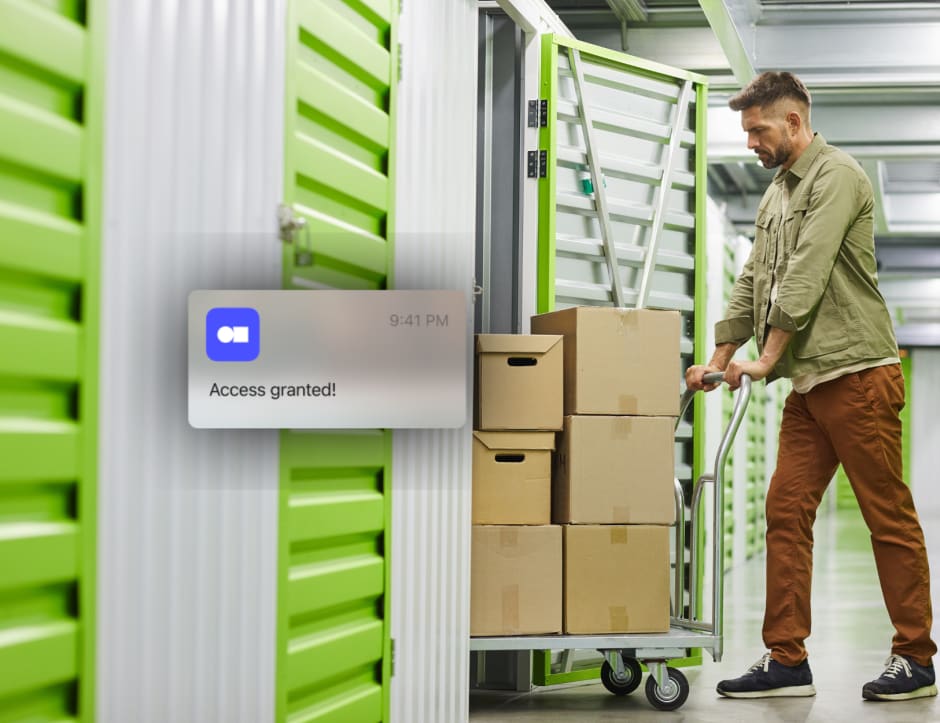
Many co-warehouses also include shared circulation paths and staging areas. While these spaces are common, they may still require restricted access to active tenants or authorized personnel. There is also each tenant’s unit or storage area, which must remain isolated from others. Door entry systems help ensure that businesses only access their designated space.
Areas housing forklifts, specialized equipment, electrical systems, or network infrastructure may require additional restrictions to prevent misuse or safety risks. Finally, facilities with parking areas or fenced perimeters may also need controlled gate access, especially in locations operating outside standard business hours.
In a co-warehouse, access control is layered. Each door, gate, and zone may require different permissions depending on the tenant, role, or time of day. A door entry system is flexible enough to manage these layers without adding operational complexity.
Types of entry methods for co-warehouses #
Door entry systems can support multiple credential types. Operators can choose access methods that align with their operational needs and user roles within the facility.
Mobile credentials #
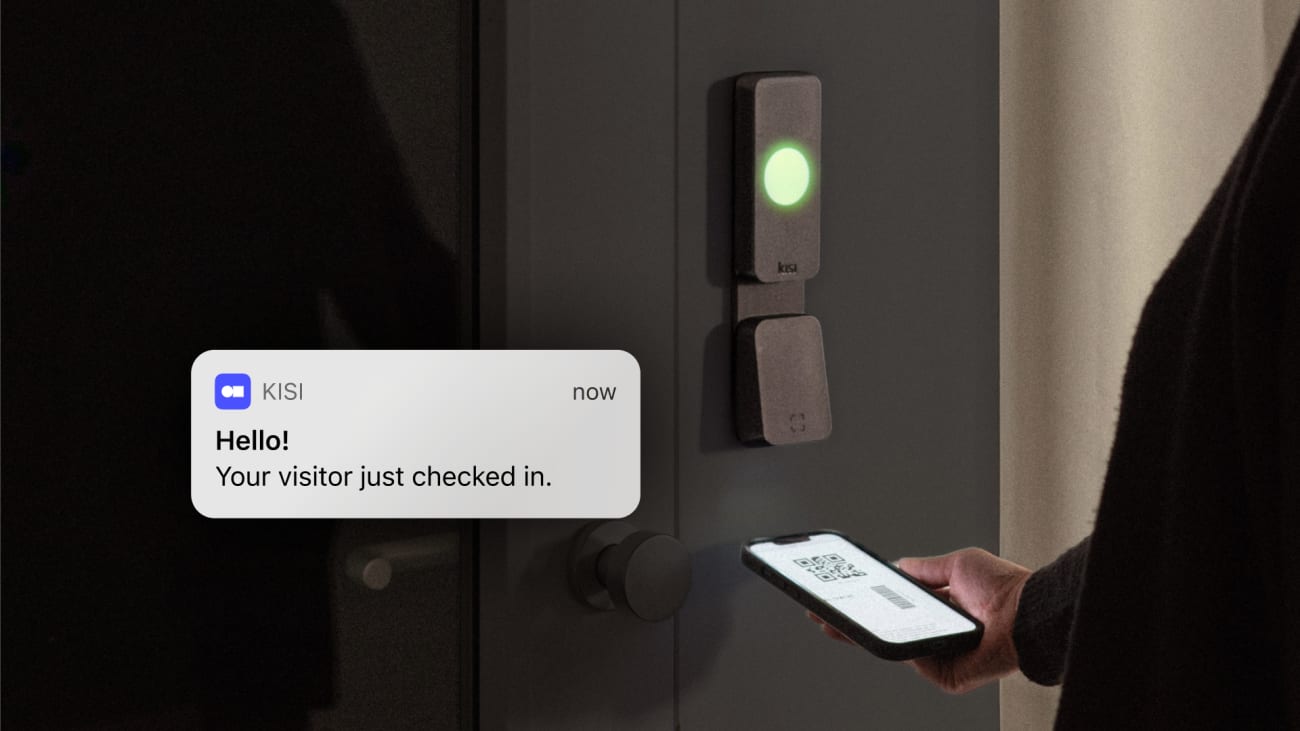
Mobile access allows users to unlock approved doors using a secure app on their smartphone. In co-warehousing environments with frequent onboarding and offboarding, access can be granted or revoked instantly without collecting physical keys or cards. Mobile credentials are particularly useful for tenant administrators, facility managers, and staff who move across multiple zones within the warehouse.
Ready to move beyond one-size-fits-all access?
Give employees, visitors, and contractors the credential that works best for them.
Key cards and fobs #
Key cards and fobs remain a practical solution in warehouse settings, especially for shift-based teams. In environments where employees may not carry personal devices during work hours, cards provide a durable and straightforward access method. Permissions can be assigned based on tenant, role, or schedule, ensuring that staff only access approved areas.
PIN and keypad access #
PIN or keypad entry is commonly used for temporary or time-restricted access. Contractors, maintenance crews, or delivery personnel can be assigned codes that automatically expire after a defined window. This reduces the need to issue permanent credentials while still maintaining control over who enters specific areas.
Intercom and remote unlock #
Intercom systems and remote unlock capabilities are especially relevant for loading docks and exterior entrances. In facilities without staffed reception points, operators can verify visitors or delivery drivers before granting access remotely. This adds a layer of oversight without requiring on-site personnel at every entry point.
In many co-warehouses, a combination of credential types works best. A flexible door entry system should support multiple methods so that access can be tailored to the operational realities of the facility.
How Kisi supports secure co-warehouse access #
Co-warehousing is starting to become a fundamental change in how the global supply chain operates. But with that, it also introduces a level of access complexity that traditional lock-and-key systems can’t handle. It blends together multiple tenants, rotating staff, and active loading zones require centralized control and clear visibility across the entire facility.
Kisi’s cloud-based door entry system allows operators to manage permissions, define zone-level access, and adjust schedules from a single platform. Access can be granted or revoked remotely, and every entry event is logged for accountability.
For co-warehouse operators looking to separate tenants, protect inventory, and simplify access management, a centralized system is essential. Learn how Kisi can support secure, scalable access for your co-warehouse facility.


Ana Coteneanu
Content writer @ Kisi | Ana focuses on long-form content that explores access control, space monetization, security, and modern workplace operations. With a background in technology-driven industries, she specializes in turning complex topics into practical insights for business audiences.
